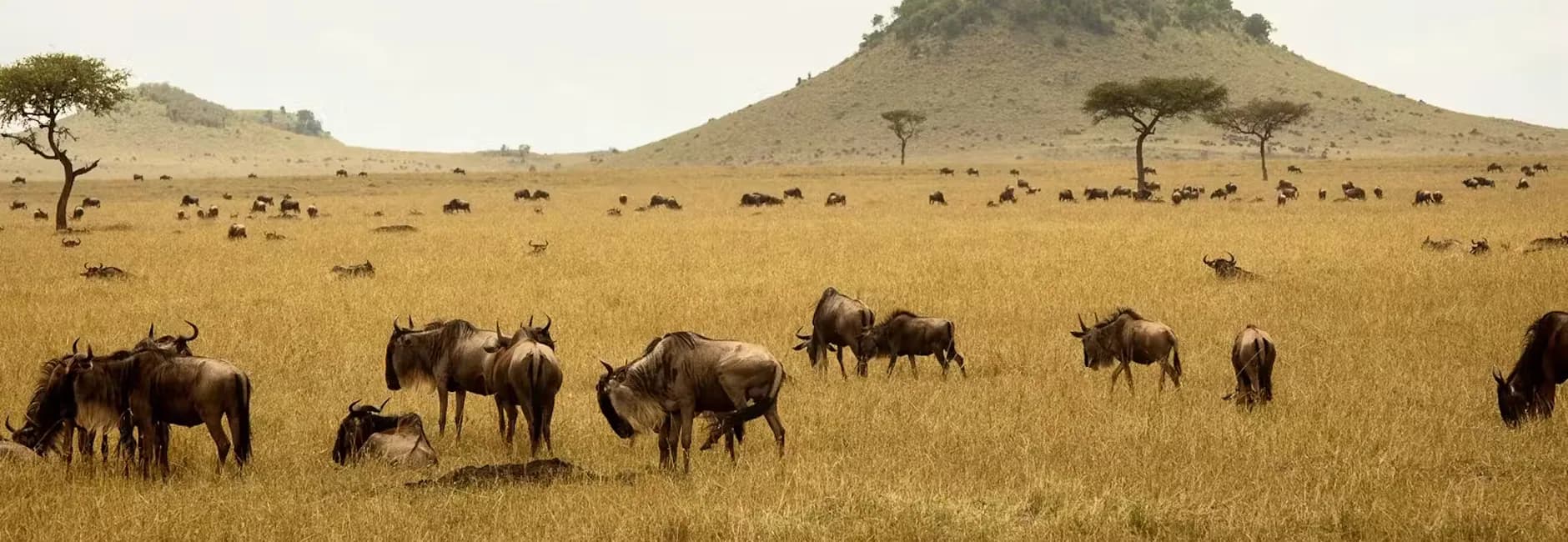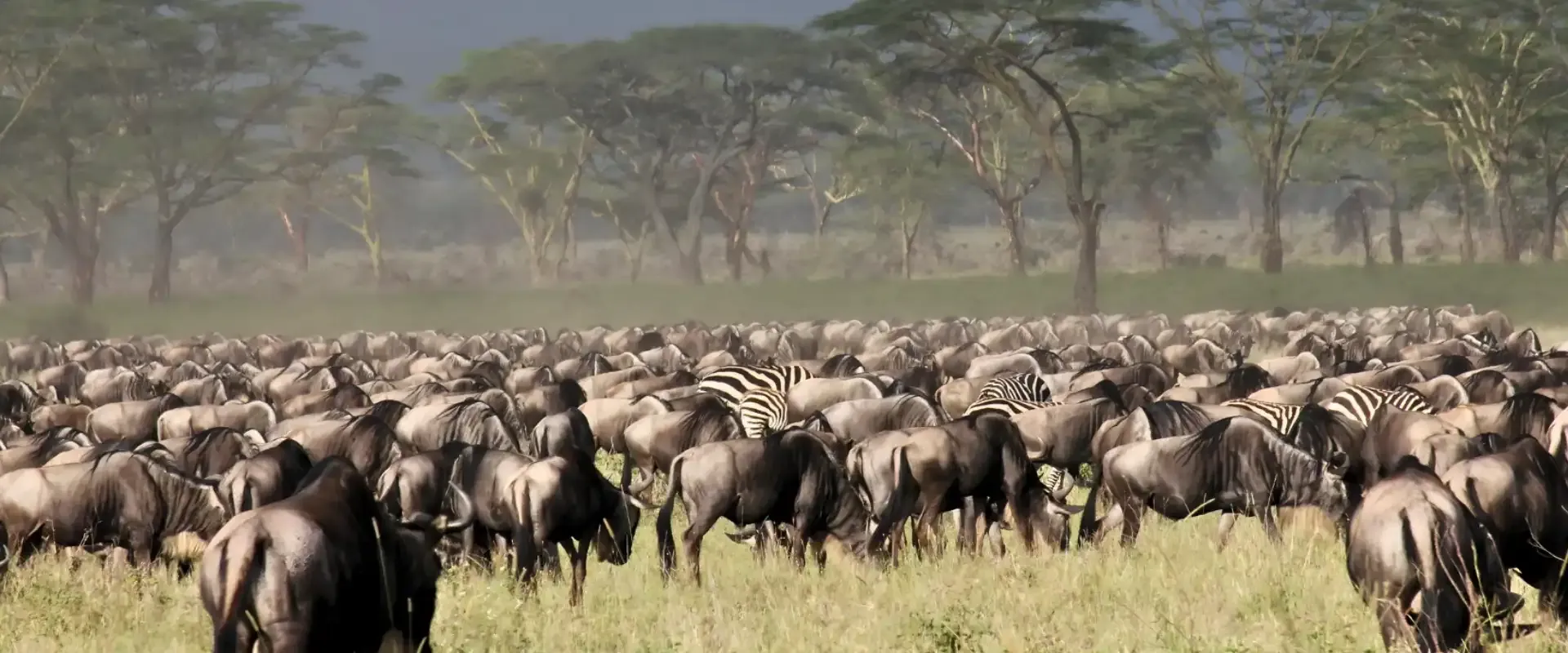
Each year well over a million wildebeest, with hundreds of thousands of zebra and gazelle, move in a great loop through the Serengeti and Maasai Mara, following rain and fresh grass. Its timing varies from year to year, so treat any calendar as a guide rather than a promise.
December to March: calving on the southern plains
The herds graze the short-grass plains around Ndutu in the southern Serengeti, where most calves are born in a few weeks, usually around February. Predators are active and sightings of lion, cheetah and hyena can be excellent.
April to June: moving north and west
As the long rains end, the herds move through the central Serengeti and into the western corridor, where they cross the Grumeti River.
July to October: the north and the Maasai Mara
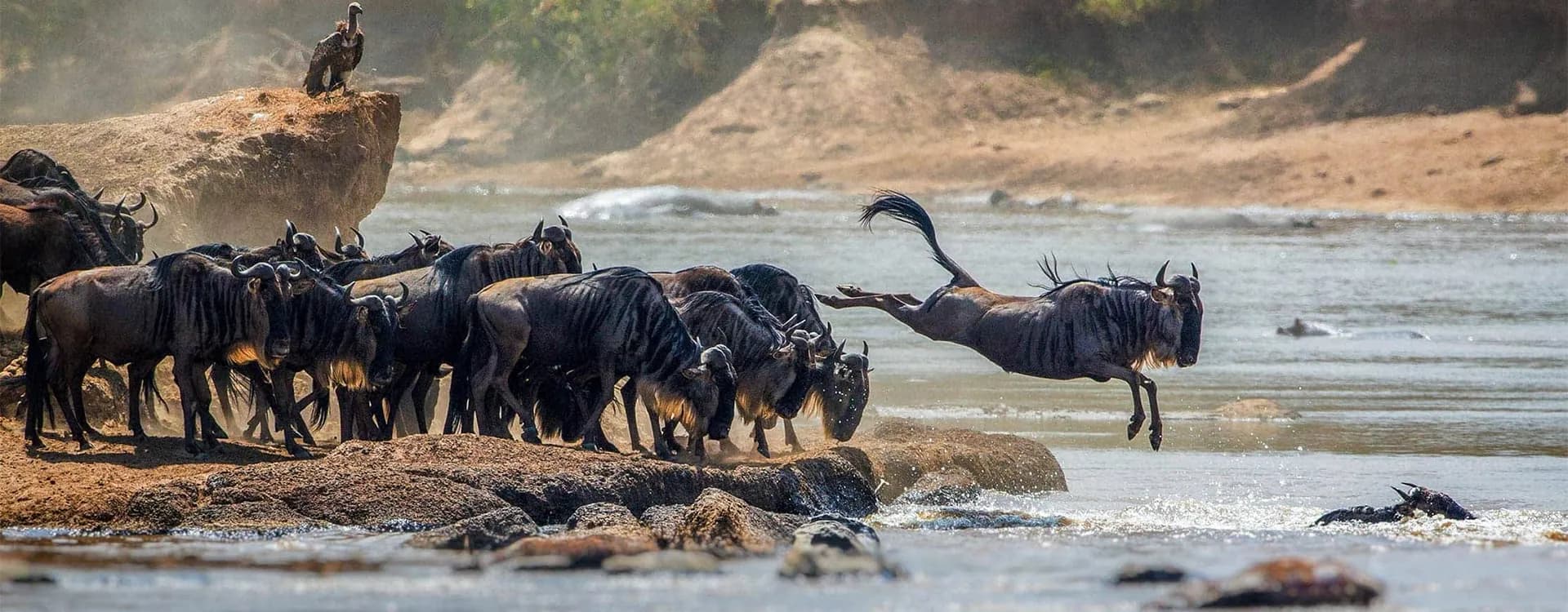
The herds reach the northern Serengeti and cross into Kenya's Maasai Mara. This is the season of Mara River crossings. Crossings are unpredictable: herds may gather for hours or days before crossing, or turn back.
November: heading south again
With the short rains, the herds move back south through the Serengeti towards the calving grounds.
Planning a migration safari
- July–October: Maasai Mara or northern Serengeti.
- Late January–March: Ndutu and the southern Serengeti for calving.
- Allow at least two or three nights in the migration area.
- Book early — the best-placed camps fill up in peak season.